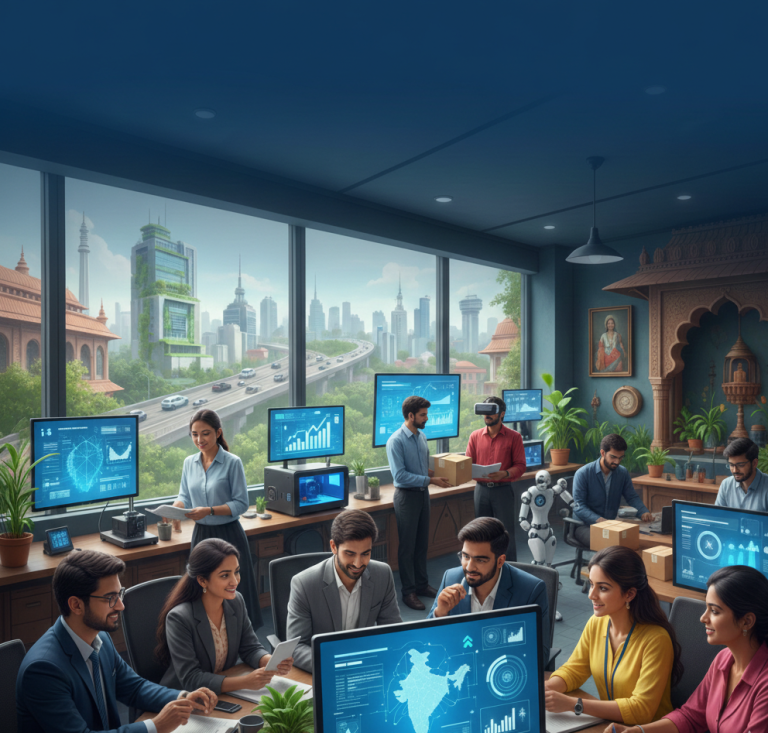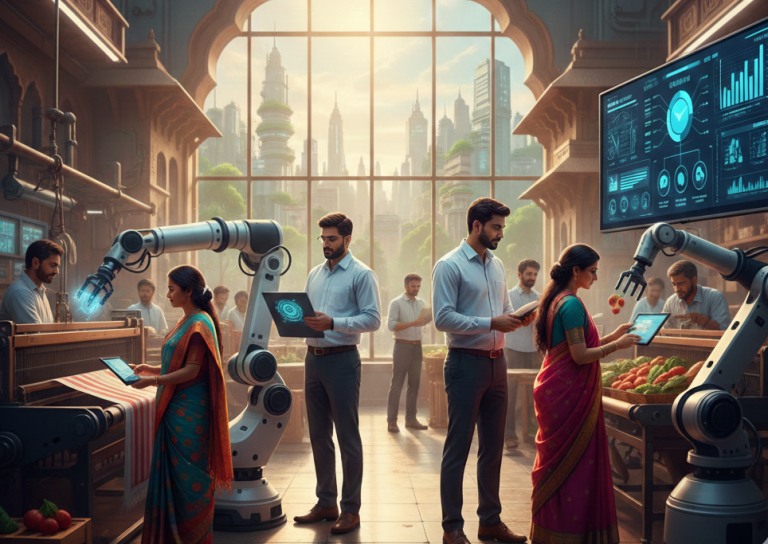
For the last decade, the mantra for Indian businesses was simple: “Move it to the Cloud.”
And it made sense. The Cloud gave SMEs access to enterprise-grade computing power without the need to buy massive servers. But as we navigate through 2026, the sheer volume of data we generate has changed the game. With widespread 5G across India and millions of IoT (Internet of Things) devices deployed in factories, retail stores, and supply chains, sending every single piece of data to a centralized cloud data center in Mumbai or Chennai is no longer efficient.
It takes time. It eats up bandwidth. And it costs money.
Enter Edge Computing—the next logical step in your IT infrastructure.
At Saikas IT Solutions, we are helping Indian SMEs adopt Edge Computing to make faster decisions, reduce cloud bills, and build resilient systems. Here is why bringing cloud power “closer to home” is a game-changer.
What is Edge Computing? (The “Branch Office” Analogy)
Think of the Public Cloud as your company’s Corporate Headquarters (HQ). It has massive processing power and stores all your historical data.
Edge Computing is like opening a highly empowered Local Branch Office.
Instead of a smart camera or a factory sensor asking HQ, “What should I do with this data?” and waiting for a response, the data is processed locally—at the “edge” of the network, right where it is generated. Only the final, essential reports are sent back to HQ (the Cloud).
Practical Edge Computing Use Cases for Indian SMEs
How is this actually being used by businesses today? Here are three ways Edge Computing is moving from theory to reality in 2026:
1. Smart Manufacturing & Quality Control
In the manufacturing hubs of Pune, Coimbatore, or Manesar, speed is everything.
- The Problem: Using a smart camera to detect a microscopic defect on an assembly line. If that image goes to the Cloud for AI analysis, the 2-second delay means the defective part has already moved down the line.
- The Edge Solution: An Edge server on the factory floor analyzes the video feed in milliseconds and instantly triggers a robotic arm to remove the defective part.
2. Retail and Quick-Commerce Analytics
- The Problem: A retail chain uses in-store cameras to analyze footfall, customer dwell times, and shelf stock levels. Streaming 24/7 high-definition video to the Cloud from 50 stores results in astronomical internet and cloud-storage bills.
- The Edge Solution: Edge devices inside the store process the video locally. They delete the raw video and only send the “insights” to the Cloud (e.g., “50 people walked past the electronics aisle today”). This slashes bandwidth costs by up to 80%.
3. Cold Chain Logistics & Fleet Tracking
- The Problem: Moving sensitive pharmaceuticals or agricultural produce across Indian highways where 5G/4G networks can occasionally drop.
- The Edge Solution: Sensors on the truck monitor temperature and humidity at the edge. If the refrigeration unit fails, the edge system doesn’t wait for a cloud connection to send an alert; it triggers an immediate local alarm for the driver to take action, preventing lakhs of rupees in spoilage.
The Real ROI: Why You Should Care
Why should an SME invest in Edge Infrastructure?
- Zero Latency: When decisions need to be made in real-time, milliseconds matter. Edge eliminates the “round-trip” delay to the cloud.
- Massive Cost Savings on Bandwidth: By processing data locally and only sending the anomalies or summaries to the cloud, you drastically reduce data transfer and storage fees.
- Offline Reliability: If your internet connection drops, an Edge system keeps running. Your factory or store operations don’t grind to a halt just because the Wi-Fi went down.
- Data Privacy & DPDP Compliance: Under India’s Digital Personal Data Protection (DPDP) Act, moving sensitive data comes with risks. Processing customer data locally at the Edge limits exposure and keeps you compliant.
The Saikas Perspective: Cloud and Edge are Better Together
It is important to note that Edge Computing does not replace the Cloud; it complements it. The Edge handles the instant, real-time reflexes, while the Cloud handles the long-term deep learning, historical data storage, and heavy analytics.
Navigating this “Hybrid” architecture can be complex, but you don’t have to do it alone.
At Saikas IT Solutions Pvt Ltd, we design infrastructure that makes sense for your bottom line. Whether you are automating a factory, optimizing a fleet, or making your retail stores smarter, we help you put computing power exactly where you need it most.
Ready to give your business an Edge?
Connect with our infrastructure specialists today to see how Edge Computing can optimize your operations and lower your IT costs.
[Book a Free IT Infrastructure Audit] | [Contact Saikas IT Solutions]